
What Is Shockwave Therapy?
Extracorporeal shockwave therapy (ESWT) delivers focused acoustic pressure waves through the skin to damaged or chronically painful tissue. Non-invasive and drug-free, it stimulates the body’s own repair mechanisms at the injury site, triggering biological activity that rest, anti-inflammatories, and conventional physical therapy cannot replicate on their own.
How Shockwave Therapy Works
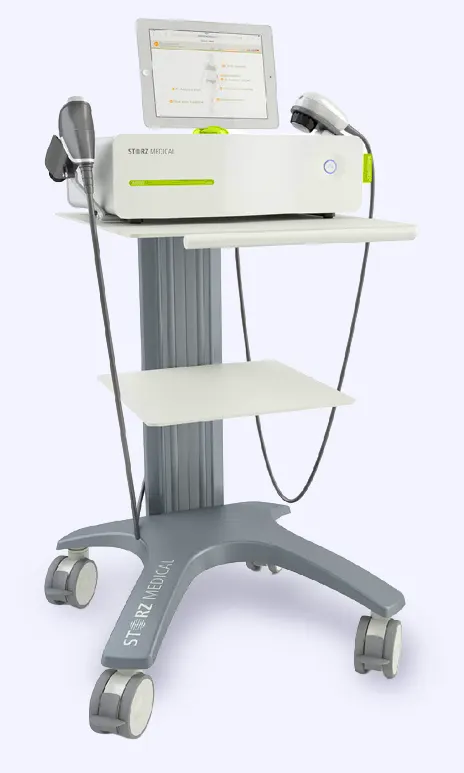
The STORZ MEDICAL MASTERPULS MP100 generates radial pressure waves through a handheld applicator moved across the treatment area. These acoustic waves penetrate soft tissue and transmit mechanical energy directly to the injury site, activating dormant repair cells, breaking down calcified deposits, and initiating a localized healing response.
The mechanism operates on several levels simultaneously. Acoustic stimulation promotes neovascularization (the formation of new blood vessels), restoring circulation to tissue that chronic injury has depleted. It reduces substance P, a primary pain-signaling compound, producing measurable relief alongside structural repair. It also triggers the release of growth factors that drive collagen synthesis and tissue remodeling. The result is a treatment that addresses the source of pain rather than masking it, with effects that continue to develop over weeks and months following each session.
REDUCED INFLAMMATION
Down-regulates pro-inflammatory signaling at the treatment site, interrupting the persistent, low-grade inflammation cycle that prevents tissue healing, delays structural repair, and perpetuates ongoing pain.
GROWTH FACTORS
Acoustic stimulation triggers the release of VEGF, TGF-β, and IGF-1 at the injury site, signaling resident cells to proliferate, rebuild collagen, and restore structural integrity to damaged tissue.
TISSUE REPAIR
Transmits mechanical energy directly to damaged tendons, fascia, cartilage, and soft tissue, reactivating repair processes the body can no longer sustain under chronic injury or degeneration.
PAIN RELIEF
Reduces substance P, the primary compound responsible for chronic pain signaling, producing measurable relief that works alongside structural repair rather than masking the underlying condition.
Who Is Shockwave Therapy Right For?
Shockwave therapy is suited for patients with chronic musculoskeletal conditions where tissue repair has stalled and conservative care has not produced lasting relief. Most candidates have been managing pain through medication, physical therapy, or repeated cortisone injections without resolving the underlying tissue problem. Shockwave addresses that tissue directly.
Good Candidates:
- Chronic tendon pain unresponsive to rest, physical therapy, or NSAIDs
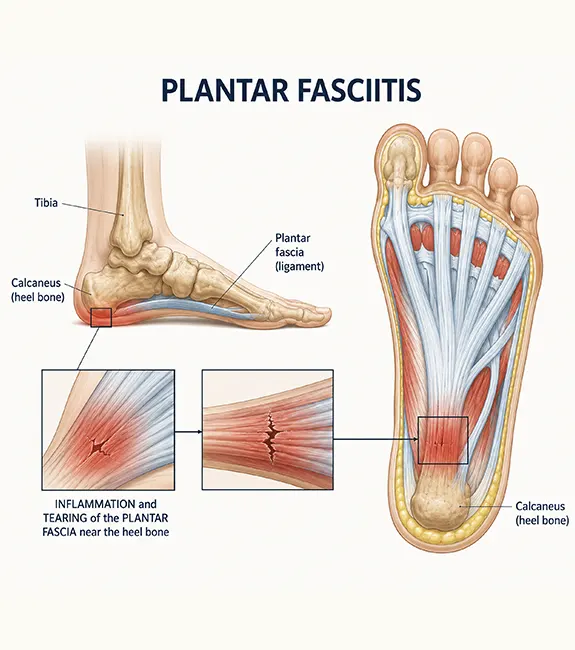
- Plantar fasciitis, Achilles tendinopathy, or patellar tendinopathy
- Calcific shoulder tendinitis or rotator cuff impingement
- Tennis elbow, lateral epicondylitis, or myofascial trigger point pain
- Hip, gluteal, or lower back pain from soft tissue dysfunction
- Musculoskeletal conditions where surgery is being considered but not yet pursued
Not Recommended If:
- Active infection or open wound at or near the treatment site
- Malignancy in or near the intended treatment area
- Blood clotting disorders or current anticoagulant therapy
- Implanted pacemaker or electronic nerve stimulator
- Cortisone injection at the target site within the prior six weeks
- Pregnancy
Schedule Your Shockwave Consultation
If you’re managing a chronic tendon injury, persistent musculoskeletal pain, or a condition that hasn’t responded to conservative treatment, shockwave therapy may be an appropriate next step. Our team will review your history and treatment goals to determine whether you’re a candidate and build the right protocol. All consultations are complimentary and by appointment only.
The STORZ MASTERPULS MP100
The STORZ MASTERPULS MP100 is a clinical-grade radial pressure wave system manufactured by STORZ MEDICAL AG in Switzerland. STORZ has been developing acoustic wave technology for medical applications for over three decades, and their systems are used in orthopedic clinics, sports medicine practices, and rehabilitation centers across more than 130 countries. The MP100 is the same class of equipment found in dedicated musculoskeletal practices where shockwave therapy has become a standard of care.
Precision Across Every Protocol
The MP100 operates between 1 and 21 Hz with effective pressure up to 5 bar. That range covers the full clinical spectrum: low-energy, high-frequency settings for acute soft tissue conditions, and high-energy output for deep calcific deposits and chronic tendinopathy. The FALCON handpiece delivers radial pressure waves through nine interchangeable transmitter tips, each sized and shaped for a different tissue structure and anatomical target zone.
The system also includes the V-ACTOR II vibration handpiece, which operates at up to 50 Hz for deep vibration therapy. This is used for myofascial preparation, muscle relaxation, and microcirculatory stimulation, and can be combined with radial shockwave treatment in the same session to extend the clinical reach of a single appointment.
Conditions & Applications
Shockwave therapy delivers mechanical acoustic energy directly into compromised tissue, triggering the body’s natural repair cascade. Whether the target is a chronic tendon injury, persistent myofascial pain, or impaired soft tissue perfusion, treatment protocols are calibrated to the specific tissue depth, pulse frequency, and pressure your condition requires.
Orthopedic & Sports
- Plantar fasciitis and Achilles tendinopathy
- Tennis elbow and lateral epicondylitis
- Calcific shoulder tendinitis and rotator cuff impingement
- Knee pain, patellar tendinopathy, and joint degeneration
- Chronic tendon injuries with impaired healing response
Chronic Pain & Myofascial
- Myofascial trigger points and referred pain patterns
- Lower back pain and lumbar soft tissue dysfunction
- Hip, gluteal, and greater trochanteric pain syndrome
- Neck and shoulder tension from chronic muscle guarding
- Hamstring origin and proximal tendinopathy
Body & Soft Tissue
- Cellulite and subcutaneous connective tissue remodeling
- Post-surgical and traumatic scar tissue adhesions
- Chronic wound stimulation and impaired tissue perfusion
- Lymphatic flow and localized soft tissue edema
- General connective tissue regeneration and remodeling
Shockwave Therapy with Jayson Watabe, PA-C
Jayson Watabe brings over 12 years of clinical experience to his work at Infinity Life Center, including seven years in a high-volume general and trauma surgery environment where precision with soft tissue, joints, and musculoskeletal injury was a daily demand. That surgical foundation directly informs his approach to shockwave therapy: the anatomical fluency, the understanding of tissue loading and mechanical stress, and the clinical judgment to identify which conditions will respond to acoustic energy delivery and which require a different path.
His clinical philosophy is rooted in functional medicine: identifying the underlying structural cause rather than managing the surface symptom. Shockwave therapy fits naturally into that framework. It stimulates the body’s own repair mechanisms at the tissue level, without injections and without masking the pain signal that points to a real structural problem. For patients dealing with chronic tendon injuries, persistent musculoskeletal pain, or conditions that conservative care has not resolved, Jayson offers a precise and evidence-supported path forward.
Get StartedWhen Other Treatments Fall Short
Most patients who arrive at shockwave therapy have already tried something else. Cortisone injections, anti-inflammatory medication, physical therapy, or in some cases surgery. These approaches work for acute and early-stage conditions. The problem is chronic tissue damage that has stopped responding. When the underlying structure is compromised and the healing process has stalled, symptom management is not the same as repair.
Symptom Management Is Not Healing
Cortisone injections and NSAIDs reduce inflammation and interrupt the pain signal. For acute injuries, this creates a window for recovery. For chronic conditions, it masks the tissue damage without addressing it. Repeated cortisone injections have been shown to weaken tendon tissue over time, accelerating the degeneration they were meant to relieve.
Surgery Is a One-Way Door
Surgical intervention for soft tissue conditions carries real risk: anesthesia, infection, scar tissue formation, and recovery measured in months. For many tendon and fascial conditions, surgical outcomes are comparable to conservative treatment at significantly higher biological cost. It cannot be undone, and it is rarely the first answer for conditions shockwave can address.
Passive Care Cannot Restart Stalled Tissue
Physical therapy is effective for rebuilding strength after acute injury. For chronic tendinopathy, where tissue has shifted into a degenerative state rather than an inflammatory one, exercise-based protocols often plateau. The underlying structure needs a direct biological stimulus to resume repair, not additional load management on tissue that has already stopped responding.
Shockwave Restarts Repair at the Source
Radial pressure waves deliver mechanical energy directly into compromised tissue, reactivating the cellular processes that chronic conditions suppress. Substance P is reduced, growth factors are recruited, neovascularization is stimulated, and collagen synthesis resumes. The tissue is not numbed or bypassed. It is reactivated.
The Shockwave Process at Infinity Life Center
A shockwave session requires no blood draw, no wound, and no preparation beyond arriving for your appointment. The provider applies acoustic coupling gel to the target area, selects the appropriate transmitter tip for the tissue being treated, and delivers radial pressure waves through the STORZ handpiece in controlled pulses. Sessions run 15 to 30 minutes depending on the number of treatment zones and the pulse count your protocol requires.
Jayson Watabe, PA-C, determines the treatment parameters before each session. Frequency, pressure, and pulse count are calibrated to the specific tissue type, injury stage, and your response to prior treatment. The STORZ MASTERPULS MP100 operates between 1 and 21 Hz at up to 5 bar of effective pressure, giving the provider precise control over the energy delivered to each target site.
Most patients notice mild soreness at the treated site for 24 to 48 hours following a session. This is a normal physiological response as the tissue initiates the repair process. There are no activity restrictions and no recovery period. A standard course of treatment runs 3 to 6 sessions spaced one week apart, with clinical reassessment after the third session to evaluate tissue response and adjust parameters if needed.
Risks & Side Effects
Shockwave therapy is non-invasive: no needles, no incisions, no injected material. Side effects are limited to temporary soreness, redness, or mild swelling at the treatment site, typically resolving within 24 to 48 hours. Because the skin is never broken, infection risk is effectively zero. Treatment is not appropriate over areas with active infection, malignancy, or implanted electronic devices such as pacemakers.
Recovery & Downtime
Most patients return to normal activity the same day. Avoid high-impact exercise or heavy loading of the treated area for 24 to 48 hours following each session. Mild soreness after treatment is expected and reflects the localized inflammatory response that initiates tissue repair. Anti-inflammatory medications should be avoided in the days immediately following treatment, as they can blunt the biological cascade that drives healing.
Timeline & Results
Some patients notice pain reduction within 24 to 48 hours of the first session. Meaningful improvement in pain, mobility, and function typically develops over 4 to 12 weeks as tissue remodeling progresses. Full results emerge over 3 to 6 months. Most conditions respond well to a course of 3 to 6 sessions spaced 5 to 7 days apart. Many patients report sustained improvement at 12 months and beyond, though chronic or complex conditions may benefit from periodic maintenance treatment.
Shockwave Therapy FAQ
Most patients experience mild to moderate discomfort during treatment, particularly over areas of concentrated tissue damage. The sensation is typically described as a deep pressure or tapping that intensifies briefly at the target site. Treatment parameters can be adjusted in real time if the intensity is too high. Discomfort during the session is normal and often indicates that the device is reaching the right tissue. Most patients tolerate treatment without difficulty and return to normal activity immediately after.
Yes. Extracorporeal shockwave therapy has over three decades of published clinical research behind it and is used in orthopedic and sports medicine practices across more than 130 countries. Plantar fasciitis, calcific shoulder tendinitis, and lateral epicondylitis are among the most well-documented indications, with randomized controlled trials demonstrating statistically significant outcomes. STORZ MEDICAL, the manufacturer of the device used at Infinity Life Center, maintains a published literature database covering thousands of peer-reviewed studies.
Shockwave technology was first developed in the 1970s for non-invasive kidney stone fragmentation. Its application to musculoskeletal conditions emerged in the late 1980s and early 1990s, with clinical adoption accelerating through the 2000s as the evidence base expanded. The technology is not new. It is established, refined over decades, and supported by a substantial body of peer-reviewed literature.
Shockwave therapy is well established in European and Asian clinical markets, where it is commonly covered by national health systems for orthopedic indications. In the United States, adoption has been slower because the treatment sits outside the surgical and pharmaceutical pathways that dominate how care reaches patients. It does not generate revenue for drug companies or surgical centers, so it does not get marketed the way those options do. Awareness is growing, but it remains underrepresented relative to its clinical track record.
No. Shockwave therapy is a mechanical intervention with a well-defined physical mechanism. A ballistic projectile accelerated by compressed air strikes a transmitter, generating radial acoustic pressure waves that propagate through tissue. The biological effects — cavitation, neovascularization, growth factor recruitment, and substance P reduction — are documented in peer-reviewed literature. The mechanism is not speculative. It is physics applied directly to tissue repair.
For most soft tissue conditions where surgery is being considered, yes. Shockwave is a low-risk, non-invasive option that does not compromise surgical eligibility. If it produces sufficient improvement, surgery may not be necessary. If it does not, nothing has been compromised and surgical options remain fully available. Clinical guidelines for conditions like plantar fasciitis and calcific tendinitis recommend shockwave as a conservative step before surgical referral is considered.
For many soft tissue conditions, shockwave is used specifically to avoid surgery. Whether it is appropriate in your case depends on the condition, its severity, and your prior treatment history. Shockwave is not indicated for conditions requiring structural repair, such as complete tendon ruptures or significant joint degeneration requiring replacement. Jayson will assess your case at consultation and be direct about whether shockwave is a viable alternative or a complement to other care.
A standard course of treatment runs 3 to 6 sessions spaced one week apart. Many patients notice improvement after the second or third session, with continued tissue remodeling occurring over the following 6 to 12 weeks as the biological response matures. The total number of sessions depends on the condition, its chronicity, and your response to treatment. Jayson will assess progress after the third session and adjust the protocol if needed.
Clinical data for conditions like plantar fasciitis and calcific tendinitis shows durable outcomes at 12 months in the majority of patients. Results reflect actual tissue repair rather than temporary suppression of the pain signal, which is why they hold. Individual outcomes depend on the condition being treated, its severity, and whether contributing factors such as biomechanics, activity load, and footwear are also addressed.
Shockwave devices vary significantly in clinical grade and output. Consumer-grade and spa-level devices exist but operate at lower pressure and frequency ranges than clinical equipment. At Infinity Life Center, treatment is performed by Jayson Watabe, PA-C, using a STORZ MASTERPULS MP100, a clinical-grade system used in orthopedic and sports medicine settings worldwide. Proper patient selection, parameter calibration, and anatomical targeting require clinical training. The device and the provider both matter.

